The short version
The 10 best things to do in West Africa in 2026, from Ghana's Cape Coast Castle to Benin's Ganvié, with timing, routing and trip-length advice.
What are the best things to do in West Africa?
The best things to do in West Africa fall into three groups: slave-trade heritage sites (Ghana's Cape Coast and Elmina castles, Nigeria's Badagry), natural landmarks (Lekki Conservation Centre, Olumo Rock, Kakum and Kintampo) and living cultural sites (Ganvié, Togo's fetish market, Osun-Osogbo). This guide ranks ten across four countries.
Quick Facts
| Best heritage sites | Cape Coast and Elmina castles (Ghana); Badagry (Nigeria) |
| Best canopy walks | Kakum (Ghana) for the rainforest setting; Lekki (Nigeria) for length |
| Best living cultural site | Ganvié floating village, Benin |
| Best festivals | Detty December (Nigeria); Osun-Osogbo Festival (Aug); Vodun Days (Benin, Jan) |
| Countries on this list | Nigeria, Ghana, Benin, Togo |
| Best season for most stops | November to March |
| Time needed | 10 to 14 days for two countries; 2 to 3 weeks for four |
Why these ten and not a generic Africa bucket list?
This list deliberately skips the savanna-and-safari imagery that most general "Africa attractions" content defaults to, because it does not reflect what West Africa mainly offers. There is no Big Five safari here. Ghana's Mole National Park is the closest thing, and it is a real but secondary draw.
West Africa's strengths are heritage sites with direct historical weight, natural landmarks built around real ecosystems rather than staged viewing platforms, and living cultural and religious sites that are still practiced today, not preserved for tourists. Understanding that distinction before you plan avoids building a trip around the wrong expectations.
1. Cape Coast Castle, Ghana
Built in 1653, Cape Coast Castle's "Door of No Return" is one of West Africa's most visited and most significant slave-trade heritage sites, with well-developed visitor infrastructure and UNESCO World Heritage recognition. The dungeons, the governor's quarters above them and the on-site museum together make it a powerful, essential stop.
Allow two hours and book a guided tour, because the context is what gives the visit its weight. Full guide: Top 10 Things to Do in Ghana.
2. Elmina Castle, Ghana
Built by the Portuguese in 1482, Elmina Castle is widely described as the oldest European building in sub-Saharan Africa. It is a different, older layer of the same history Cape Coast Castle tells, spanning early gold trade through to the Atlantic slave trade, and is worth visiting alongside it rather than instead of it.
The two castles are about 15 minutes apart by road, so most itineraries combine them in a single day with Kakum National Park.
3. Kakum National Park, Ghana
Kakum's canopy walkway is a series of suspension bridges strung between rainforest trees, roughly 350 meters long and high enough above the forest floor that the ground disappears from view. It sits inside genuine tropical rainforest with real wildlife, which sets it apart from Nigeria's Lekki walkway in both ecosystem and structure.
Go early for cooler weather and more birdlife, and wear closed shoes. Anyone uneasy with heights should ask a guide before committing, because the bridges move underfoot.
4. Lekki Conservation Centre, Nigeria
Lekki Conservation Centre's canopy walkway, at roughly 400 meters, is widely billed as Africa's longest. It sits inside a wetland and mangrove reserve on Lagos's eastern edge, a very different ecosystem from Kakum's rainforest, and is one of the most accessible genuinely distinctive stops in Lagos.
It is an easy half-day outing from anywhere in Lekki or Victoria Island. Full guide: Lekki Conservation Centre: complete 2026 tour guide.
5. Badagry Slave Route, Nigeria
Badagry offers one of West Africa's most direct, unmediated connections to Transatlantic Slave Trade history. Highlights are the Point of No Return on Gberefu Island, reached only by boat, and the Mobee Royal Family Museum's original artifacts.
It is a straightforward day trip from Lagos, and it pairs well with Ouidah in Benin, which tells the other half of the same story. Full guide: Badagry slave route and heritage tour.
6. Olumo Rock, Nigeria
Olumo Rock is a 137-meter granite outcrop in Abeokuta, and it is not just a climb: it is the reason the city exists, founded around the rock in 1830 as an Egba refuge. The route up passes shrines, caves and viewpoints over the city.
Abeokuta is a short drive from Lagos, so it works as an easy day trip. Full guide: Abeokuta and Olumo Rock: complete 2026 guide.
7. Ganvié Floating Village, Benin
Often called the "Venice of Africa", Ganvié is a stilt village on Lake Nokoué, built by the Tofinu people as refuge from slave raiders who could not follow them onto the water. It is a living community of thousands of residents, not a recreated tourist village.
Visits are by boat from Calavi near Cotonou. Go with a guide who understands local etiquette on photography and purchases. See our Ganvié guide.
8. Togo's Fetish Market
Lomé's Akodessewa Fetish Market is West Africa's largest traditional Vodun (voodoo) medicine market. It is a significant living religious and cultural site in the region where Vodun originated, and not a tourist curiosity.
Go with a guide who can explain what you are seeing and handle introductions and photography permissions. Read more in our fetish market guide.
9. Osun-Osogbo Sacred Grove, Nigeria
Osun-Osogbo is a UNESCO World Heritage site and an active Yoruba religious site along the Osun River, with sculptures and shrines scattered through a protected forest. It is most vivid during its annual festival, held around late July to August, which draws very large crowds at its grand finale.
Outside the festival you can visit the grove calmly. See our Osun-Osogbo Festival tour if you want to plan around the event.
10. Kintampo Waterfalls, Ghana
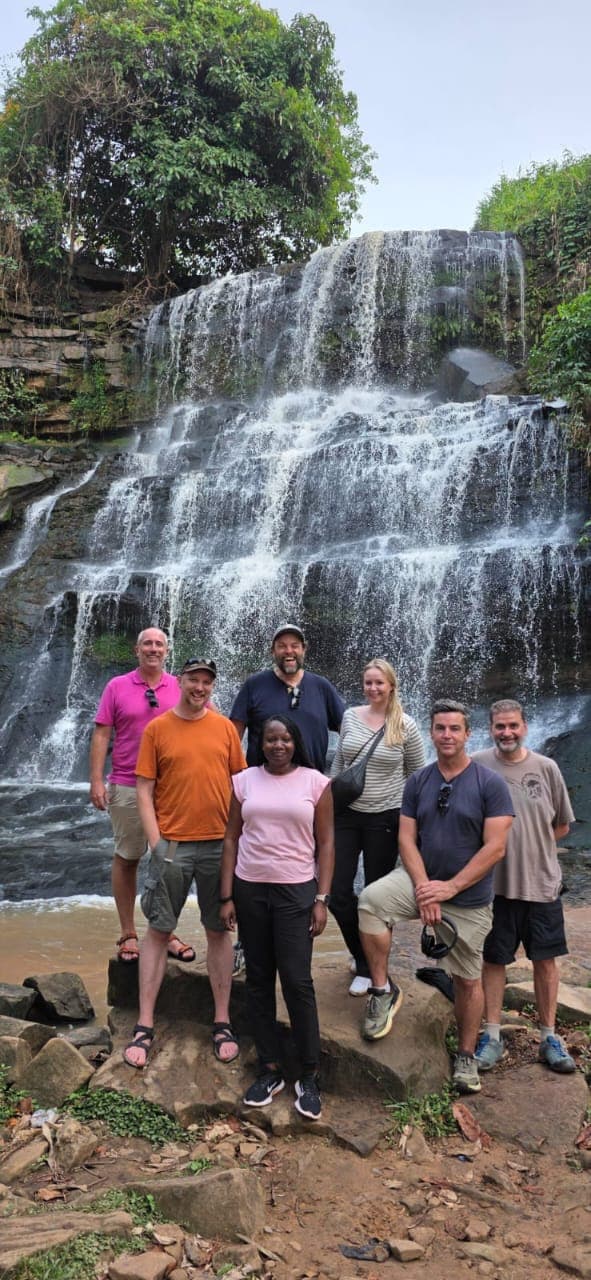
Kintampo is a striking multi-tiered waterfall in central Ghana, often paired with a nearby monkey sanctuary. It is one of Ghana's best natural stops outside the Cape Coast heritage circuit and a natural break on the long drive from Kumasi toward the north.
Treat it as a swim-and-lunch stop on a longer route, and carry small cash for entry and parking fees.
When is the best time to see these attractions?
Most of this list sits within West Africa's shared dry season, roughly November through March, which is the best window for Kakum's and Lekki's elevated walkways because wet conditions make them less pleasant. Osun-Osogbo is the exception, falling in the wet season because its timing is tied to the religious calendar.
If Detty December or Calabar Carnival is part of your plan, expect a real price premium on flights and accommodation. See our Detty December guide and Calabar guide for how to plan around it.
How do you plan a route between them?
These ten stops span four countries, so route planning matters more than at a single destination. Ghana's Cape Coast, Elmina and Kakum combine in one day trip from Accra. Lekki and Badagry both work as Lagos day trips, Olumo Rock is a short Abeokuta day trip, and Osun-Osogbo is a longer extension into Osun State.
Ouidah and Ganvié (Benin) and Lomé's fetish market (Togo) sit along the coastal corridor between Lagos and Accra and combine well on one leg. Trying to hit all ten without a guide who knows this routing usually means far more time in transit than at the sites, which is the logistics problem a multi-country tour solves.
| Base | Day trips that work |
|---|---|
| Lagos | Lekki, Badagry, Abeokuta and Olumo Rock |
| Cotonou | Ganvié, Ouidah |
| Lomé | Fetish market, Lake Togo |
| Accra | Cape Coast, Elmina, Kakum |
| Kumasi | Bonwire kente village, Kintampo en route north |
What should you pack and know before going?
Light, breathable clothing, closed-toe shoes for canopy walks and Olumo Rock, sun protection and insect repellent cover most of the list. Carry modest cover-ups for religious and royal sites, and small cash for entry fees and tips.
Entry rules differ by country: Nigeria now requires a pre-departure e-Visa for most visitors (see our Nigeria e-Visa guide), and a yellow fever certificate is typically required across the region. Check each country's current requirements before you book.
Frequently asked questions
What is the number one thing to do in West Africa?
There is no single answer, because it depends on whether heritage, nature or living culture matters most to you. Cape Coast Castle and Badagry lead for heritage, Kakum and Lekki for nature, and Ganvié and Togo's fetish market for living culture.
Can I visit Ghana and Nigeria attractions on one trip?
Yes. Ghana and Nigeria pair naturally on one itinerary along with Benin and Togo, given their shared coastal geography and comparable flight times between capitals. A guide helps with border crossings and sequencing.
What is the longest canopy walkway in Africa?
Lekki Conservation Centre's walkway in Lagos, at roughly 400 meters, is widely billed as Africa's longest. Kakum National Park in Ghana is shorter but is set inside true rainforest and is often considered the more dramatic of the two.
Is Ganvié worth visiting?
Yes. It is a genuine, still-inhabited stilt village with real historical significance, not a staged attraction, which makes it one of the most distinctive stops in West Africa.
How many days do I need to see the top West Africa attractions?
A focused two-country trip (Ghana and Nigeria, or Benin and Togo) covering the highlights needs 10 to 14 days, while all four countries is better planned as two to three weeks to avoid rushing the border legs.
Is West Africa safe for tourists?
Conditions vary by country and region. The areas covered by this list are routinely visited by tourists, but you should check your government's current advice and travel with an experienced local guide, especially across borders.
When is the best time to go?
November to March is the most comfortable overall. December brings festivals and higher prices, and the Osun-Osogbo Festival is the main wet-season exception.