The short version
A respectful, practical guide to Lomé's Akodessewa Fetish Market, the world's largest Vodun market: what it is, what you'll see and how to visit.
What is the Akodessewa Fetish Market?
The Akodessewa Fetish Market (Marché des Féticheurs) in Lomé, Togo, is widely described as the world's largest market for Vodun religious and traditional-medicine items — animal parts, dried herbs, carved fetish statues, and other materials that Vodun priests and healers use in real spiritual practice. This isn't a museum exhibit or a performance staged for tourists; it's a working spiritual pharmacy that's operated in some form for over 150 years, and the priests you'll meet there are practicing, not performing.
That distinction matters for how you should approach a visit. Treat it the way you'd treat a functioning place of worship, because that's what it is.
What Vodun actually is
Vodun (often anglicized as "voodoo") is a formally recognized religion across Togo, Benin, Ghana, and Nigeria, with roots that predate — and were carried across the Atlantic during — the slave trade, later evolving into related traditions like Haitian Vodou and Louisiana Voodoo. It's a belief system built around a supreme creator, a pantheon of spirits (vodun) tied to natural forces and ancestors, and priests who mediate between the spirit world and daily life — healing, protection, and guidance among their core functions. Benin recognizes it as an official religion, and Togo's Vodun practice is deeply woven into everyday life, not confined to festivals.
The Akodessewa market exists to supply that practice: priests and practitioners come here to source the specific materials — animal parts, herbs, carved figures — a given ritual or remedy calls for, the same way a pharmacist sources ingredients for a prescription.
It's worth being direct about why this framing matters, rather than treating it as a formality. Vodun has been portrayed in Western film and media almost exclusively as sinister — curses, dolls, dark magic — a caricature with little connection to what the religion actually is or does for the millions who practice it across West Africa and its diaspora. Walking into Akodessewa expecting horror-movie iconography sets you up to misread everything you see. Walking in understanding it as a working pharmacy for a real, structured belief system changes what the same objects mean.
The word "fetish" itself is worth a note, since it's the term used in the market's name and throughout English-language coverage of it. In this context it derives from the Portuguese *feitiço* ("charm" or "made object"), used by early European traders to describe objects believed to hold spiritual power — not the modern colloquial sense of the word. Vodun practitioners themselves generally use "vodun" or specific names for individual spirits and objects; "fetish market" is the name that stuck in English-language usage and travel literature.
What you'll see and experience
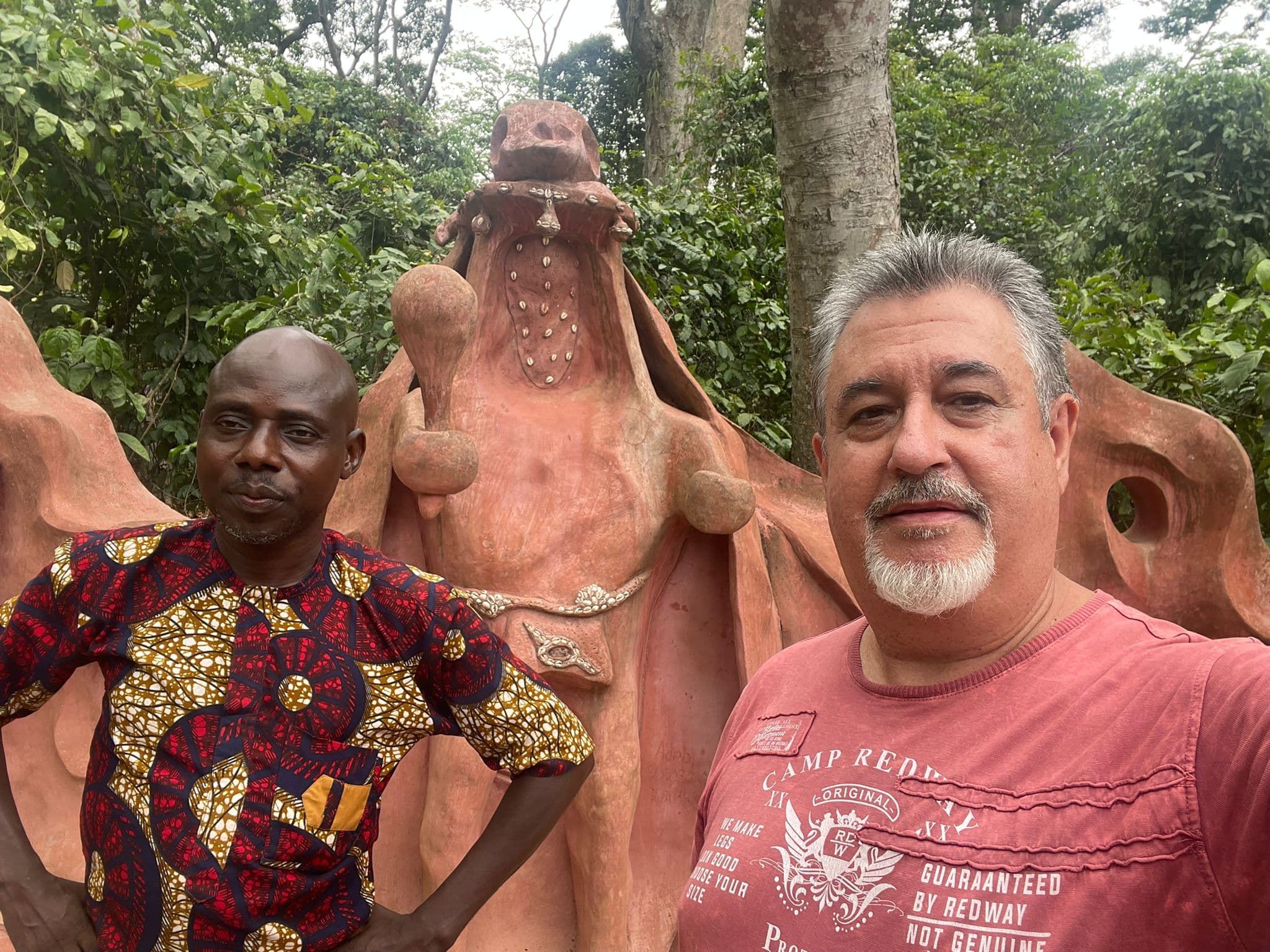
The market itself is visually intense and won't be for everyone: dried animal skins, skulls, and carcasses (monkey heads, birds, snakes, and other species) laid out alongside carved wooden fetish statues, and stallholders who can explain, in detail, what each item is for. Along the market's back wall, Vodun priests sit in small shelters where you can — respectfully, and usually for an additional fee — speak with a practitioner, who may offer a reading or explain a specific ritual.
Guides on-site (often English-speaking) will walk you through the market and translate what you're looking at — which items treat which ailments, which are for protection, which are used in specific ceremonies. This context is genuinely most of the value of the visit; without it, the market can read as simply a shock-value curiosity, which misses the point entirely.
What's actually sold, and why
Every stall is organized around function, not just species — a useful way to understand what you're looking at rather than seeing an undifferentiated wall of dried animal parts.
- Protection and warding items — carved wooden figures and charms intended to guard a home, a business, or a person against harm, comparable in function (if not form) to protective talismans in many other belief systems.
- Healing ingredients — dried herbs, roots, and animal parts combined into remedies for specific physical ailments, prepared and prescribed by a priest much like a pharmacist would fill a prescription.
- Fertility and life-event items — materials used in rituals around childbirth, marriage, and other major life transitions.
- Divination tools — objects used by priests during readings to interpret a visitor's situation and recommend a course of action.
A knowledgeable guide can point to a specific stall and explain which of these categories you're looking at and why a given item is prepared the way it is — this is the difference between the market reading as a curated shock display versus a coherent, purposeful system, and it's exactly the context a self-guided walk-through tends to miss.
How do you get to the Akodessewa Fetish Market?
Akodessewa sits in the Akodessewa district of Lomé, just a few kilometers from Lomé's international airport — a short zemidjan (motorcycle taxi) ride of roughly 10–15 minutes from most central Lomé hotels.
Entry and photography fees: sources cite an entrance fee in the region of 3,000 CFA per person, with an additional photography/filming fee (reportedly per camera or lens used) — figures cited across sources range from roughly 2,000 CFA upward. Confirm the current combined total on arrival or with your guide, since these fees are locally set and can change.
Best time to visit: mornings tend to be quieter and cooler, and give priests more time to talk with you without the market being at its busiest.
Guided vs. independent: a guide isn't strictly required to enter, but given the amount of context that gets lost without one — what you're looking at, which questions are appropriate to ask, how to interact with a priest respectfully — most visitors get substantially more out of a guided visit than a self-guided walk-through.
| What | Typical Cost/Time | Notes |
|---|---|---|
| Zemidjan from central Lomé | 10–15 min, low fixed fare | Fastest, most common way to arrive |
| Market entry | ~3,000 CFA/person | Confirm current rate on arrival |
| Photography/filming | Additional fee per camera | Ask before photographing a priest directly |
| Priest consultation/reading | Additional fee, negotiated | Optional, arranged on-site |
| Recommended visit length | 45–90 minutes | Longer with an engaged guide and conversations |
| Best time of day | Morning | Quieter, cooler, more time with priests |
(Figures above are directional 2026 estimates from multiple travel sources — confirm current pricing with your guide or on arrival.)
What are the photography rules and etiquette?
This is one of the few places on a West Africa itinerary where etiquette genuinely shapes whether your visit is welcome or intrusive:
- Pay the photography fee and ask before photographing a specific priest or a ritual in progress — the general market stalls are more permissive, but a person actively practicing is a different situation.
- Don't touch items without asking. Many are specifically prepared for a particular ritual purpose.
- Approach conversations with priests as genuine cultural exchange, not as a novelty photo-op — if you engage respectfully, most are willing to explain their work in real depth.
- Dress modestly. Nothing elaborate is required, but this is a religious site, and dressing accordingly is noticed and appreciated.
Is it disrespectful to visit the fetish market as a tourist?
Not if you approach it as what it is — a real, functioning place of worship and practice — rather than as shock-value curiosity content. Some travel coverage of Akodessewa leans hard into "horror market" framing, treating the market primarily as a collection of macabre objects to gawk at. That framing is the disrespectful part, not the visit itself. Vodun practitioners at the market are generally welcoming to visitors who engage with genuine curiosity and appropriate respect, and a guided visit — where a knowledgeable guide sets the right tone and provides real context — goes a long way toward making sure that's the experience you have.
Combining it with the rest of a Togo–Benin trip
Akodessewa works best as one stop within a broader Vodun-heritage route rather than a standalone half-day in Lomé. The natural pairing is Benin: Ouidah's Python Temple and Kpasse Sacred Forest, and the National Voodoo Festival in Ouidah (second Friday of January), cover the same religious tradition from different angles — a temple, a forest ritual site, and a market, respectively. Seeing all three in sequence, with a guide who can carry the same explanatory thread across each stop, gives you a far more complete picture of Vodun than any single site can on its own. This is exactly the route our Voodoo Festival Tour follows, moving from Lomé through Ouidah and on to Abomey and Ganvié.
What else should you see in Togo?
The market is one stop on a country that rewards a few days. Togoville and Lake Togo, the hills around Kpalimé and Aného's Vodun heritage all fit a short trip from Lomé, and our summer in Togo travel guide lays out a full week. For where Togo sits among the region's best stops, see best places to visit in West Africa.
If Vodun culture is what draws you, our 8-day Voodoo Festival tour links Togo and Benin on one guided route.
What should you read next?
See it as part of the Voodoo Festival Tour
Akodessewa is a natural stop on any Togo–Benin itinerary built around Vodun heritage — our 8-Day Voodoo Festival Tour already routes through Lomé's fetish market on day two, alongside the National Voodoo Festival in Ouidah and the Python Temple. Get a custom quote or read our full Togo destination guide for more on planning around it.
---
Frequently asked questions
What is Vodun/voodoo?
Vodun is a formally recognized religion practiced across Togo, Benin, Ghana, and Nigeria, centered on a supreme creator, a pantheon of spirits tied to nature and ancestors, and priests who mediate healing, protection, and guidance. It's the source tradition behind Haitian Vodou and Louisiana Voodoo, carried across the Atlantic during the slave trade.
Is it disrespectful to visit the fetish market as a tourist?
No, provided you treat it as a real place of worship — asking before photographing, not touching items without permission, and engaging with priests respectfully rather than treating the market as a curiosity display.
How much does it cost to visit?
Sources cite an entrance fee around 3,000 CFA per person plus an additional photography fee — confirm the current combined total with your guide or on arrival, as these figures shift.
Can I take photos?
Yes, generally for an additional fee, though you should ask before photographing a specific priest or an active ritual rather than assuming blanket permission.
Is the market safe to visit?
Yes — it's a regular, established stop on Lomé itineraries, generally visited during the day with a guide or driver, with no particular safety concerns beyond the normal precautions you'd take at any busy market.
Will I be pressured to buy something or pay for a ritual I don't want?
Not typically with a guided visit — a good guide will help you navigate the market at your own pace and translate what's being offered without pressure. Vendors and priests are running a genuine business, so some conversational sales pitching is normal, but it's straightforward to politely decline.
Is this the same market featured in some "shocking market" travel videos online?
Likely yes — Akodessewa is the market most often used for that kind of sensationalized content, which is exactly why the framing matters so much going in. The market itself hasn't changed; how it's presented has.