The short version
The 10 best things to do in Ghana in 2026: Cape Coast and Elmina castles, Kakum canopy walk, Kumasi, Wli Falls, Mole safari, plus when to go.
What are the best things to do in Ghana in 2026?
The best things to do in Ghana are the slave-trade heritage castles at Cape Coast and Elmina, the Kakum rainforest canopy walk, Ashanti royal culture in Kumasi, Wli Falls in the Volta Region and safari at Mole National Park. Most first-time visitors can cover the core of this list in 7 to 10 days.
Quick Facts
| Most significant heritage site | Cape Coast Castle and Elmina Castle |
| Best-known nature stop | Kakum National Park canopy walkway |
| Tallest waterfall in West Africa | Wli Falls (Volta Region), about 80 meters |
| Biggest market experience | Kejetia Market, Kumasi (10,000+ stalls) |
| Best wildlife destination | Mole National Park (north) |
| Best season for most sites | November to March (dry season) |
| Time needed for the full list | 10 to 14 days |
Why does this list start with heritage sites?
Ghana's tourism identity is built around its Transatlantic Slave Trade heritage more than any other single category, and that is deliberate. The country has spent years developing Cape Coast and Elmina as anchors for diaspora travel, most visibly through the 2019 "Year of Return" and the "Beyond the Return" initiative that followed it.
For many visitors, especially travelers tracing African ancestry, the castles are not an optional add-on to a Ghana trip. They are close to the point of it. The natural and cultural stops later in this list round out the picture once that foundation is covered, which is also the order we use when we plan itineraries.
1. Cape Coast Castle
Built in 1653 and expanded by successive European powers, Cape Coast Castle holds the "Door of No Return", where enslaved Africans were led out to waiting ships. It is a UNESCO World Heritage Site, and the on-site museum and dungeons make it one of the most significant Atlantic slave trade memorials in West Africa.
Allow at least two hours. The guided tour matters more here than almost anywhere else in Ghana, because the context around each space (the male and female dungeons, the governor's quarters above them, the chapel built over the cells) is what gives the visit its weight. Read more in our guide to heritage travel in Ghana.
2. Elmina Castle
Elmina Castle was built by the Portuguese in 1482 and is widely described as the oldest European building in sub-Saharan Africa. It tells an older layer of the same history as Cape Coast Castle, from early gold trade through to the Atlantic slave trade, and it changed hands between the Portuguese, the Dutch and the British.
Most guided itineraries combine Cape Coast Castle, Elmina Castle and Kakum National Park in a single long day from Accra or Cape Coast. If you can afford the time, splitting this over two days leaves room to walk through Elmina's working fishing harbor, one of the most photographed and lively scenes on the coast.
3. Kakum National Park
Kakum's canopy walkway is a series of seven suspension bridges strung between tall rainforest trees, roughly 350 meters long and high enough above the forest floor that the ground disappears from view. It is one of the best-known canopy walks in Africa and sits inside genuine tropical rainforest, not a managed park setting.
Go early in the morning, when the forest is quieter and cooler and birdlife is most active. Closed-toe shoes are essential, and anyone uneasy with heights should talk to a guide before committing, because the bridges move underfoot. Combine it with the castles for a classic Central Region day.
4. Kumasi and the Ashanti Region
Kumasi is the heart of Ashanti royal culture and offers a very different Ghana from the coast. The Manhyia Palace Museum covers Ashanti kingship history, the Okomfo Anokye Sword Site carries deep spiritual significance, and Kejetia Market, with over 10,000 stalls, is among the largest open-air markets in West Africa and an overwhelming, worthwhile commercial experience.
A short drive away, the weaving villages of Bonwire and Adanwomase let you watch master weavers make authentic kente cloth on traditional looms, the real source of Ghana's most recognizable textile. Kejetia is easy to get turned around in, so arrange a guide or a fixed meeting point in advance.
5. Wli Waterfalls
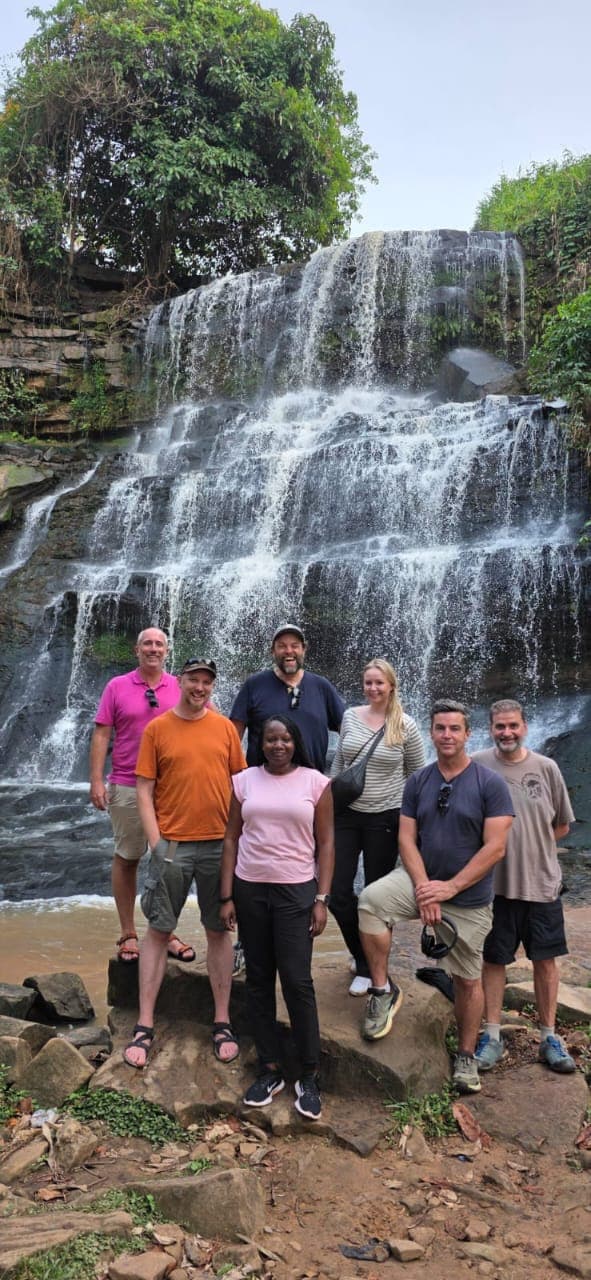
In the Volta Region, Wli Falls is West Africa's tallest waterfall at roughly 80 meters (the upper falls), reached by a forest walk of around an hour each way. The hike is the point: you pass through rainforest, cross streams and arrive at a cliff-framed basin where the falls drop into a swimmable pool.
Wli is often combined with the Tafi Atome monkey sanctuary nearby. The falls carry more water in the wet season (April to October), so if the waterfall itself matters more to you than a dry trail, a wet-season visit has a real upside.
6. What should you see in Accra?
Ghana's capital rewards a full day on its own. The Kwame Nkrumah Mausoleum and Memorial Park cover independence-era history, Independence Square is the symbolic heart of the modern state, and the W.E.B. Du Bois Memorial Centre honors the African American scholar who spent his final years in Ghana.
Add Jamestown, a fishing-community neighborhood with dense layers of colonial and local history that is best explored on a guided walk, and finish with the National Museum's galleries on Ashanti royal regalia. Labadi Beach is a good city beach break between stops, and Accra's food scene (kelewele, waakye, jollof and fresh fish) deserves its own evening.
7. Mole National Park
Mole is Ghana's premier wildlife destination, in the north of the country: elephants, antelope, baboons and a genuine walking-safari experience that most Ghana itineraries skip in favor of the coast. It is well worth adding if your trip has room for a northern extension.
Wildlife viewing is generally best in the dry season, when animals concentrate around remaining water sources. Pair it with a visit to the Larabanga Mosque, a Sudano-Sahelian-style mosque that is one of the oldest in the country, a short distance from the park entrance.
8. Kintampo Waterfalls
Kintampo Falls is a striking multi-tiered waterfall in central Ghana, often paired with a nearby monkey sanctuary. It is one of the country's best natural stops outside the main Cape Coast heritage circuit, and a natural break on the long drive between Kumasi and the north.
Because it sits on the route to Mole, it works well as a swim-and-lunch stop rather than a day in itself. Carry cash for small entry and parking fees and swimwear if you plan to cool off.
9. Nzulezo Stilt Village
In the Western Region, Nzulezo is a village built entirely on stilts over Lake Tadane, reached by paddling a canoe through a narrow forest waterway. Residents live, trade and keep their school and church above the water, and the village is on Ghana's UNESCO tentative list.
It makes an unusual comparison with Benin's Ganvié, which we cover in our Ganvié floating village guide. Treat it as a respectful community visit rather than a spectacle: ask before photographing people and buy local goods where possible.
10. Busua and Cape Three Points
Ghana's western coast has the country's best beach stretch. Busua is a laid-back surf and beach town with calm sections for swimming, and nearby Cape Three Points, the southernmost point of Ghana, has a lighthouse, fishing villages and quieter sand.
It is the natural place to slow down at the end of a heritage-heavy itinerary. Budget a night or two, and expect rougher roads than on the main Accra to Cape Coast corridor.
When is the best time to visit each place?
Cape Coast, Elmina and Kakum are most comfortable from November through March, during Ghana's dry season, when rainforest trails and the canopy walkway are driest and clearest. Kumasi and the Ashanti Region follow the same broad pattern, though markets like Kejetia operate year-round.
Mole's wildlife is generally best viewed in the dry season. Wli Falls is the exception, with fuller flow from April to October. If you are planning around events, December is Ghana's busiest and most festive month, so book flights and accommodation early. Our Ghana December tour is timed around that period.
How should you plan your route?
A sensible first-trip route runs Accra to Cape Coast and Elmina to Kakum, then north to Kumasi, and (if time allows) onward to Mole before flying or driving back. Adding the Volta Region for Wli Falls works best from Accra as a separate two-day trip.
Distances are longer than they look on a map, and road conditions vary, so build in buffer time and avoid trying to cover more than one major region per day. A guide and driver also removes the stress of navigating, parking and negotiating at each stop.
Practical tips for visiting
Entry fees apply at Cape Coast Castle, Elmina Castle, Kakum National Park and most museums. Budget for them separately from any tour package price and confirm current rates locally, since they are adjusted periodically and often differ for foreign visitors and residents.
Wear comfortable closed-toe shoes for Kakum and any hike to Wli, carry small cash for tips and fees, and keep sun protection and insect repellent on hand year-round. Dress respectfully at heritage sites and in Ashanti royal spaces. For more on packing and entry rules, see our guide to traveling to Ghana for the first time and what a two-week Ghana trip costs.
Frequently asked questions
What is the number one attraction in Ghana?
Cape Coast Castle, thanks to its historical significance and UNESCO World Heritage status. Most first-time visitors pair it with Elmina Castle and Kakum National Park as one connected trip along the Central Coast, which gives the best introduction to Ghana's history and landscape.
How many days do I need in Ghana?
A focused week covers Accra, the Cape Coast heritage circuit and Kakum comfortably. Adding Kumasi and the Ashanti Region, Wli Falls in the Volta Region or Mole National Park in the north is better planned as 10 to 14 days, since distances between regions are long.
Is Kakum National Park worth visiting?
Yes. Its canopy walkway is among the best known in Africa, and the surrounding rainforest offers wildlife and ecosystem variety you will not see in coastal Ghana. Go early in the morning for cooler weather and more birdlife, and wear closed shoes.
What is the tallest waterfall in Ghana?
Wli Waterfalls in the Volta Region, at roughly 80 meters for the upper falls, is widely recognized as the tallest waterfall in West Africa. It is reached on a forest hike of about an hour each way and carries the most water between April and October.
Is Kumasi worth visiting alongside Accra and Cape Coast?
Yes, if you have the time. Kumasi centers on living Ashanti royal culture, kente weaving and the huge Kejetia Market, which makes a strong contrast to the coastal heritage sites most first-time visitors prioritize.
Is Ghana safe for tourists?
Ghana is generally regarded as one of the more stable and visitor-friendly countries in West Africa. Normal precautions apply in busy areas, such as watching valuables in markets and avoiding isolated spots at night. Check your government's current travel advice before you go.
Can I combine Ghana with Nigeria, Benin and Togo?
Yes. Ghana pairs naturally with its neighbors on a single West Africa route, and a guide removes the border logistics. See our 9-day Nigeria, Benin, Togo and Ghana tour and our top 10 things to do in West Africa.