The short version
Plan a Nigeria trip in 2026: e-Visa rules, safety by region, best time to visit, costs, top attractions, food and sample itineraries.
Is Nigeria worth visiting in 2026?
Yes. Nigeria is Africa's most populous country and, for travelers who plan around the real regional safety picture, one of the most rewarding in West Africa: Abeokuta's 137-meter granite outcrop, Africa's biggest street carnival in Calabar, the UNESCO-recognized Osun-Osogbo festival and Lagos, a megacity with the continent's most influential music and art scene.
This guide covers what matters for planning a trip in 2026: the mandatory e-Visa that replaced visa-on-arrival in 2025, where tours actually operate, realistic costs and when to go.
Quick Facts
| Visa | Mandatory pre-departure e-Visa (visa-on-arrival ended August 4, 2025) |
| Currency | Nigerian naira (₦) — roughly ₦1,400–₦1,500 to $1, check a live rate before you travel |
| Capital | Abuja; Lagos is the largest city and commercial hub |
| Best time to visit | November–March (dry season); December is peak "Detty December" season |
| Where tours operate | Lagos, Abuja, Abeokuta, Calabar, southwestern Nigeria |
| Typical trip cost | From roughly $1,200 per person for a guided week, excluding international flights |
| Vaccination | Yellow fever certificate mandatory for entry |
Where Nigeria is, and why that matters for planning
Nigeria sits firmly in West Africa, on the Gulf of Guinea coast between Benin to the west and Cameroon to the east, with Niger and Chad along its northern border. It's not in East Africa — a mix-up that shows up in search more often than you'd expect — and the distinction matters practically: West African countries share visa-free movement for ECOWAS-region travelers, similar flight routing through hubs like Lagos and Accra, and a climate pattern (a wet season roughly April–October, a dry Harmattan season November–March) that's very different from East Africa's. That regional layout is also why Nigeria combines naturally with Ghana, Benin, and Togo on one trip — see our full geography breakdown for the details and how the region fits together.
Do I need a visa?
Yes, unless you hold an ECOWAS-member passport. As of May 1, 2025, Nigeria replaced visa-on-arrival with a mandatory pre-departure e-Visa, and manual visa-on-arrival issuance at the airport ended entirely on August 4, 2025 — if your mental model of Nigeria entry still includes landing and sorting out a visa at the counter, that's now out of date. The e-Visa system covers 177 nationalities across 18 visa categories, and you must carry a printed Electronic Travel Authorization Letter (eTAL) when you travel. Processing officially runs 24–48 hours, though it can stretch to several business days during peak season (November–January, when Detty December traffic spikes application volume). The standard tourist e-Visa starts from around $79 as a government fee (varying by nationality, higher for some countries), plus a separate $50–$170 biometrics fee paid on arrival — apply directly through the official NIS portal rather than a paid third-party site, which typically adds another $100, and apply at least a few weeks ahead rather than assuming a same-week turnaround. A yellow fever vaccination certificate is a separate, mandatory entry requirement regardless of visa type. Full step-by-step walkthrough, document checklist, and current fee table: Nigeria e-Visa Guide 2026.
Is Nigeria safe to visit?
The honest answer is regional, not national. Lagos, Abuja, Abeokuta, and Calabar — the cities Ucomeafrik's tours actually operate in — are broadly safe for prepared visitors taking normal city precautions. Nigeria's northeast and northwest carry real, elevated risk from insurgency and banditry, and current US and UK government advisories specifically flag those states; that risk is genuine and shouldn't be waved away. It also shouldn't be generalized onto the entire country, which is roughly four times the size of the UK. Our founder Confidence has written the full, region-by-region breakdown from a Lagos-based guide's perspective: Is Nigeria Safe to Visit? A Local Guide's Honest Answer.
When is the best time to visit Nigeria?
November through March is Nigeria's dry season and the most comfortable stretch for sightseeing — cooler mornings, less rain, clearer skies for climbs like Olumo Rock. December specifically is Detty December, Lagos's month-long festive season running from mid-November through early January, when diaspora visitors flood in for concerts, beach parties, and New Year's events; it's also when flights and accommodation are priced highest and hardest to book. Late July into early August brings the Osun-Osogbo Festival at the UNESCO-listed sacred grove in Osogbo, a major Yoruba religious and cultural event drawing several hundred thousand participants at its August grand finale. If you want the energy of the festive season without the peak-season premium, mid-November or early-to-mid January hits a lot of the same atmosphere at meaningfully lower prices. Full month-by-month breakdown: Best Time to Visit Nigeria.
How much does a trip cost?
A one-week guided trip covering Lagos, Abuja, or Calabar typically runs from around $1,200–$2,500 per person excluding international flights, depending on group size, accommodation tier, and season — December specifically carries a real price premium worth planning around. Independent budget travel can run cheaper day-to-day, but loses the guided access, vetted transport, and local context that make first visits to Nigeria meaningfully easier. Full itemized breakdown by category: How Much Does a Trip to Nigeria Cost? 2026 Budget Breakdown.
What are the top things to do in Nigeria?
- Lagos — Nigeria's cultural and commercial engine: Lekki Conservation Centre, Nike Art Gallery, Afrobeats nightlife, Lekki and Elegushi beaches.
- Abuja — the planned federal capital: the National Mosque, National Christian Centre, Aso Rock, Millennium Park.
- Abeokuta — Olumo Rock, the 137-meter granite outcrop the city was founded around in 1830, plus the Itoku Adire tie-dye market and Ake Palace. Full guide: Abeokuta & Olumo Rock: Complete 2026 Guide.
- Calabar — Cross River State's forested, walkable capital, home to Africa's biggest street carnival every December. Full guide: Calabar Tours, Vacation Packages & Carnival 2026.
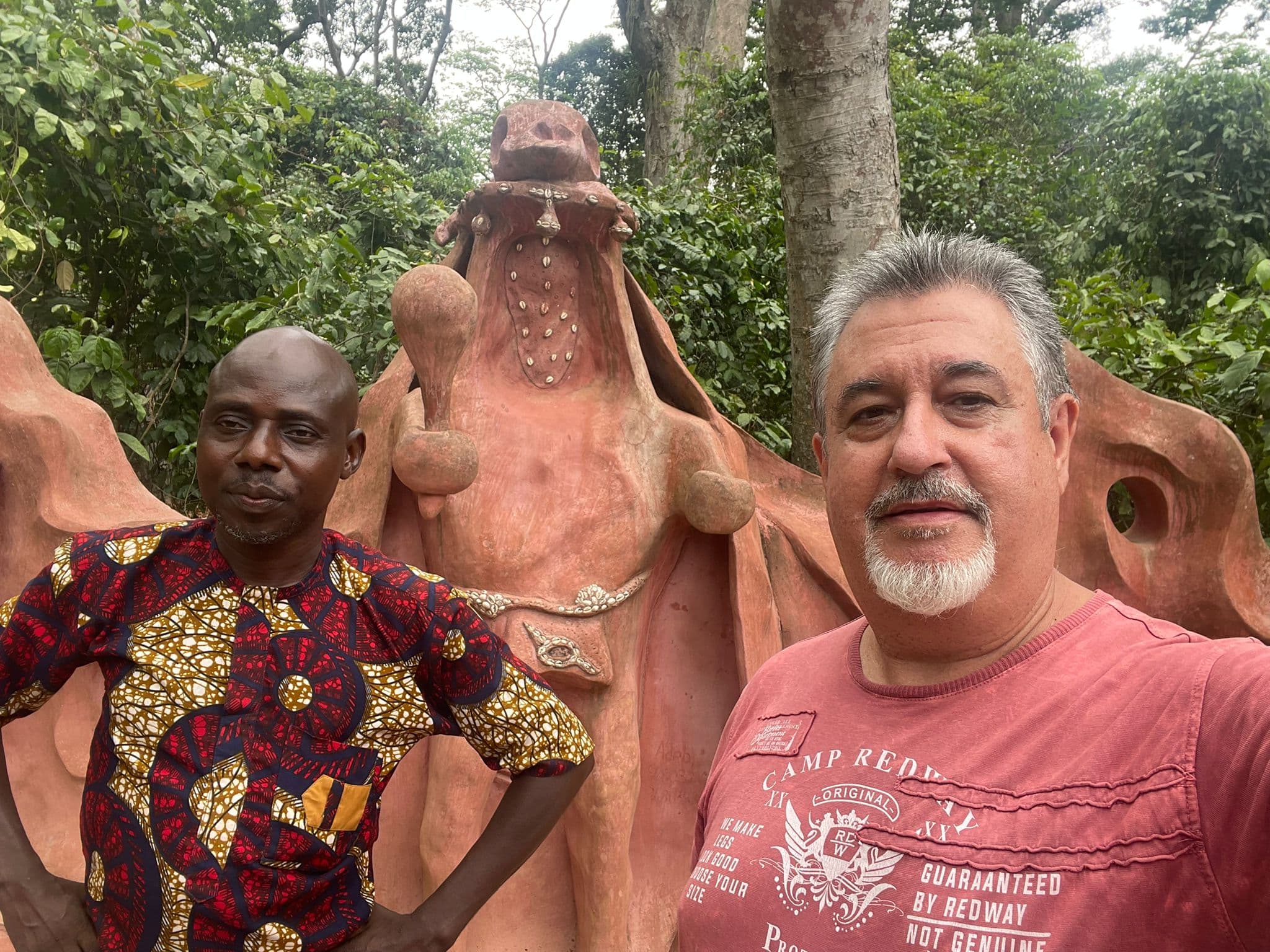
- Osun-Osogbo Sacred Grove — a UNESCO World Heritage site and living Yoruba religious site, most vivid during its August festival.
- Zuma Rock, Yankari National Park, Kano's ancient city walls — for travelers extending into northern-adjacent or off-the-standard-route territory.
A full ranked list with practical logistics for each: 20 Best Things to Do in Nigeria in 2026.
What should you eat in Nigeria?
Jollof rice is the obvious entry point, and Nigeria's version — smoky, tomato-based, usually cooked over firewood at scale for gatherings — is a genuine point of national pride (the "Jollof Wars" with Ghana are a running, mostly good-natured rivalry). Beyond that, look for suya (spiced grilled skewered meat, best from a roadside vendor at night), pounded yam with egusi or efo riro soup, moi moi (steamed bean pudding), and puff-puff for something sweet. Lagos in particular has a genuinely serious restaurant scene now alongside the street food — both are worth doing, not one instead of the other.
How do you get around Nigeria?
Lagos traffic is a real planning factor, not a cliché — cross-city trips that look like 20 minutes on a map can take over an hour at peak times, so build slack into any Lagos-based itinerary. Ride-hailing apps (Bolt, Uber) work well in Lagos and Abuja for independent moves between guided stops. Domestic flights connect Lagos, Abuja, Calabar, and other major cities reasonably efficiently and are worth using for longer hops rather than the road, especially given road-travel risk in some corridors. On a guided tour, this is handled for you — private vetted transport is one of the more meaningful things a local operator adds versus independent travel here specifically.
Festivals and Detty December
December is Nigeria's biggest tourism moment by a wide margin. Detty December — Lagos's festive season, running from roughly mid-November through early January — draws hundreds of thousands of diaspora and international visitors for concerts, beach events at Lekki and Badagry, and New Year's celebrations, with Calabar's carnival running its own parallel calendar through December into early January. It's also when the country's known overpricing problem for flights, accommodation, and event tickets is most acute — a legitimate, widely reported issue worth planning around rather than discovering after you've booked. Full breakdown, including how to avoid the price-gouging traps: Detty December 2026: First-Timer's Guide to Lagos' Festive Season.
What does a sample Nigeria itinerary look like?
4 days — Abuja focus. A compact first look at the federal capital: National Mosque, Aso Rock, Millennium Park, and a day trip option to Zuma Rock. Matches our 4-Day Abuja Tour.
7 days — Calabar. Cross River's forest and carnival capital, timed around the December carnival calendar or done as a quieter cultural trip the rest of the year. Matches our 7-Day Calabar Tour.
7 days — Osun-Osogbo Festival. Built around the Yoruba festival at the UNESCO-listed sacred grove, with time in Abeokuta. Matches our Osun-Osogbo Festival Tour.
10 days — Northern Nigeria. For travelers who want to go further beyond the standard southwestern route, into the regions where our tours operate safely. See our Northern Nigeria Tour.
9 days — Nigeria combined with Ghana, Benin, and Togo. Given Nigeria's location, pairing it with its western neighbors on a single trip is a genuinely efficient use of flight time. See our 9-Day West Africa Tour.
Every tour above is one Confidence Aguiyi, Ucomeafrik's founder and lead tour guide, personally leads — not a subcontracted itinerary. Have a specific date range or interest in mind? Message us on WhatsApp or request a custom quote and we'll build around it rather than fitting you into a fixed package.
What should you read next?
What should you read next?
Frequently asked questions
Is Nigeria safe to visit in 2026?
Yes, in the regions where tourism actually happens — Lagos, Abuja, Abeokuta, and Calabar are broadly safe for prepared visitors, while the northeast and northwest carry real, government-flagged risk best avoided on a first visit. See our full regional safety breakdown for specifics.
Do I need a visa to visit Nigeria?
Yes, unless you hold an ECOWAS-member passport. Nigeria requires a mandatory pre-departure e-Visa as of May 1, 2025 — visa-on-arrival is no longer available. Apply online in advance and carry your printed eTAL when you travel.
What is the best month to visit Nigeria?
November through March, during the dry season, for the most comfortable sightseeing conditions. December specifically is Detty December, the highest-energy but also highest-priced month to visit.
How many days do I need in Nigeria?
A focused first trip covering one region (Abuja, or Calabar around carnival) works well at 4–7 days. If you want to see Lagos, Abeokuta, and a second region, budget 10 days or more, or pair Nigeria with a neighboring country for a longer multi-country trip.
Is Lagos worth visiting?
Yes — Lagos is Nigeria's cultural and commercial center, with a music, art, and nightlife scene that shapes trends across the continent, alongside real beach and conservation-area options like Lekki Conservation Centre.
How much does a trip to Nigeria cost?
A guided one-week trip typically runs $1,200–$2,500 per person excluding international flights, with December carrying a real price premium. See our full budget breakdown for category-by-category numbers.