
The short version
Ghana or Nigeria for a first West Africa trip? A guide-led comparison of visas, safety, costs, culture, food and timing for 2026.
Should you visit Ghana or Nigeria first?
For most first-time visitors to West Africa, Ghana is the easier first trip: it has a well-worn heritage circuit, simpler logistics and a calmer pace. Choose Nigeria first if what you want is scale and energy, such as Lagos, Afrobeats, Nollywood, Detty December and festivals, and you are happy to travel with a local guide.
Neither choice is wrong, and many travelers eventually do both. The right answer depends on what you want from the trip, how much friction you can tolerate, and when you are going. The comparison below is built from our own guiding experience in both countries, so it covers the trade-offs that data tables leave out.
Quick Facts
| Ghana | Nigeria | |
|---|---|---|
| Best for | A gentler first trip, heritage, nature | Big-city energy, music, festivals |
| Entry | Visa arranged in advance for most nationalities | Mandatory pre-departure e-Visa for non-ECOWAS travelers |
| Language | English (official) | English (official) |
| Currency | Ghanaian cedi | Nigerian naira |
| Typical guided week (excluding flights) | About $1,000 to $2,500 per person | About $1,400 to $2,700 mid-range (budget from about $500) |
| Best season | November to March | November to March |
| Peak event | December diaspora season | Detty December in Lagos |
| Pace | Calmer, more structured | Faster, more intense |
Why do most comparisons feel unhelpful?
Search for "Ghana vs Nigeria" and you will mostly find data tables and scorecards. They are convenient, but they flatten things that matter for travelers. One popular comparison site, for instance, boils safety down to a single score per country. That kind of number hides the fact that both countries are regional in practice: conditions in Lagos or Abuja are not the same as in the far north of Nigeria, and conditions in Accra are not the same as near Ghana's northern borders.
A traveler also does not live in a country-wide average. They live in a specific itinerary, with a specific route, in a specific month. So this guide compares the two countries on the questions that actually shape a first trip: how hard is it to enter, how easy is it to move around, what will you see, what will it cost and when should you go.
How do the visa and entry rules compare?
Ghana: Most nationalities, including US, UK, EU and Canadian passport holders, need a visa arranged before travel, through the e-Visa portal or an embassy. There is no general visa-on-arrival for most Western passport holders. A single-entry tourist e-Visa is reported at roughly $100 to $150, with processing of about 5 to 10 working days, so apply at least three weeks ahead. A yellow fever certificate is required. Our first-time Ghana guide covers the documents in detail.
Nigeria: Visa-on-arrival ended. Nigeria replaced it with a mandatory pre-departure e-Visa on 1 May 2025, and manual issuance at airports stopped on 4 August 2025, so every non-ECOWAS traveler must be approved before departure. The government fee is reported from about $79 and varies by nationality, with additional costs reported on arrival, so confirm on the official portal. Our Nigeria e-Visa guide walks through the process.
The difference in practice: both require planning ahead, and both reward applying early. Nigeria's process has more moving parts and more reports of delays at peak season, so allow extra time for a Nigeria trip in November to January.
Which is safer, Ghana or Nigeria?
Ghana is broadly regarded as one of West Africa's more stable and visitor-friendly countries, particularly in the areas most tours cover: Accra, Cape Coast and Kumasi. Normal city precautions apply, such as watching valuables in crowded markets and avoiding poorly lit areas at night.
Nigeria's picture is explicitly regional. Lagos, Abuja, Abeokuta and Calabar, where our tours operate, are broadly safe for prepared visitors who take normal precautions, while parts of the North East and pockets of the North West carry real, elevated risk and are covered by government advisories. That is a regional distinction, not a blanket verdict, and we explain it in detail in our guide on whether Nigeria is safe to visit.
The honest summary: Ghana is simpler to plan for safety. Nigeria needs more local knowledge, and that is the main reason we recommend traveling with a guide there. Road travel deserves extra care in both countries, so use reputable drivers.
How do the costs compare?
Outside December, the two countries are broadly comparable. Our budget guides give the following ranges per person, excluding international flights:
| Style | Ghana (two weeks) | Nigeria (one week) |
|---|---|---|
| Budget | About $1,000 to $1,400 | About $500 to $1,000 |
| Mid-range | About $2,200 to $3,000 | About $1,400 to $2,700 |
| Comfortable | About $4,500 to $7,000+ | About $2,900 to $4,900 |
International flights are typically in the region of $700 to $1,400 depending on where you depart. The real difference is seasonal, not structural: Nigeria's Detty December surge is sharper and more concentrated in Lagos than Ghana's own December season, so a December trip to Nigeria usually carries the steeper premium. See our detailed Nigeria trip cost breakdown and two-week Ghana budget for the full itemized numbers.
What will you see in each country?
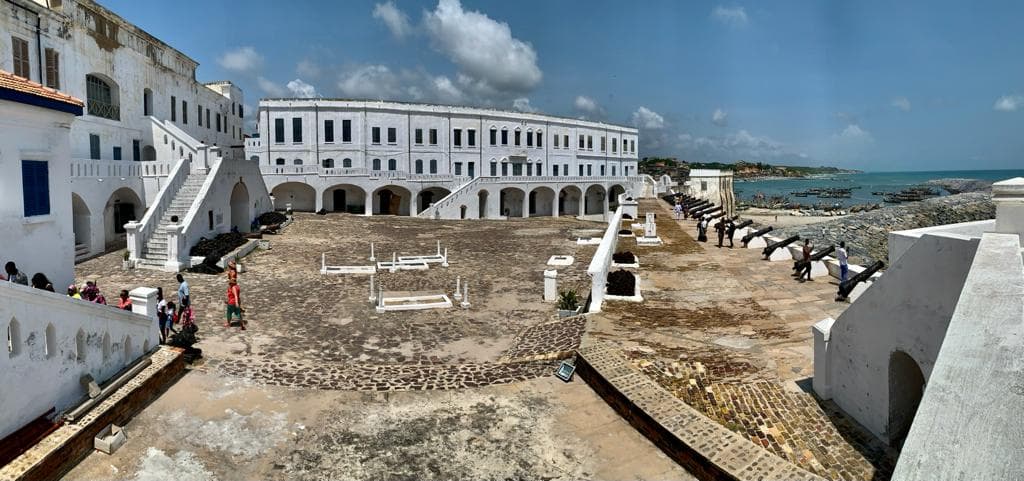
Ghana's strengths are heritage and ease. Cape Coast Castle and Elmina Castle are among West Africa's most significant slave-trade heritage sites, Kakum National Park's canopy walkway sits inside genuine rainforest, and Kumasi offers living Ashanti royal culture, kente weaving and the enormous Kejetia Market. Wli Falls and Mole National Park add nature and wildlife. Ghana reported 1,306,962 international arrivals in 2025, which reflects an established visitor infrastructure. See our top 10 things to do in Ghana.
Nigeria's strengths are scale and cultural depth. Lagos is a megacity with the continent's most influential music and art scene, Abeokuta's Olumo Rock is the reason the city exists, Calabar hosts Africa's biggest street carnival, and Osun-Osogbo is a UNESCO-recognized Yoruba sacred grove. Badagry offers a direct, unmediated connection to slave-trade history. See our 20 best things to do in Nigeria.
In short, Ghana is the stronger choice for a structured heritage-and-nature itinerary, and Nigeria is stronger for living, fast-moving culture.
How do food and daily life compare?
Both countries share a famous rivalry over jollof rice, which is a good-natured point of national pride and a reason in itself to try both. Ghana's table leans toward waakye, banku with tilapia, kelewele and red-red. Nigeria's offers suya, pounded yam with egusi or ogbono, pepper soup and a huge variety of regional dishes.
Daily life is the clearest contrast. Accra is easier to navigate on foot and by ride-hailing, and first-timers often find it a relaxed introduction. Lagos is bigger, louder and more demanding, with traffic that dominates planning. That is part of its appeal for some travelers and a drawback for others.
How easy is it to get around?
In Ghana, the main route between Accra, Cape Coast and Kumasi is well established, with a mix of private drivers, shared taxis and domestic flights. Distances look short on a map but road travel takes longer than expected, so build in buffer time.
In Nigeria, Lagos traffic can turn a 30-minute journey into two hours, so day trips such as Abeokuta, Badagry and Lekki need early starts. Domestic flights, for example Lagos to Calabar or Abuja, are worth using for longer legs. In both countries a private driver or guided tour removes most of the friction.
When is the best time to visit each?
Both countries are best from November to March, during the dry season. December is the festival peak in both: Ghana's diaspora season and Nigeria's Detty December, with a real price premium in each. For dry-season comfort without the December surge, January to March is the sweet spot.
If festivals matter most, Nigeria's calendar is richer, with Detty December, Calabar Carnival and the Osun-Osogbo Festival. If you prefer calm, travel outside December. Our best time to visit Nigeria guide has the month-by-month breakdown, and our Detty December guide covers the overpricing problem.
Which should you choose based on your travel style?
Choose Ghana first if you:
- Are new to West Africa and want a gentler introduction
- Want heritage, rainforest and royal culture in one compact route
- Prefer a calmer pace and simpler logistics
- Are planning a diaspora "homecoming" trip centered on the castles
Choose Nigeria first if you:
- Want big-city energy, music, nightlife and festivals
- Are going for Detty December or Calabar Carnival
- Have Nigerian heritage and a specific reason to go
- Are comfortable traveling with a guide and a flexible plan
Can you do both on one trip?
Yes, and many travelers do. Accra and Lagos are connected by regular flights, and the coast between them, through Togo and Benin, makes a rewarding overland route if you have the time. A guide who knows the border crossings saves a great deal of time on that route.
A simple two-country plan looks like this:
| Days | Where | Focus |
|---|---|---|
| 1 to 4 | Accra and Cape Coast | Heritage circuit, Kakum |
| 5 to 6 | Kumasi | Ashanti culture, kente villages |
| 7 | Fly or travel to Lagos | Arrival and rest |
| 8 to 10 | Lagos and Abeokuta | Music, art, Olumo Rock |
| 11 to 12 | Badagry or Calabar | Heritage or carnival season |
Our 9-day Nigeria, Benin, Togo and Ghana tour covers four countries in one guided route, and the 13-day Grand West Africa tour adds Côte d'Ivoire. If you want to see how the two sit alongside the rest of the region, read our guide to the best places to visit in West Africa, and see how to choose a reputable West Africa tour operator before you book.
Frequently asked questions
Is Ghana or Nigeria better for a first trip to West Africa?
Ghana is the easier first trip for most people, with an established heritage circuit and simpler logistics. Nigeria is the better first trip if you want big-city energy, music and festivals and you are happy to travel with a local guide.
Is Ghana cheaper than Nigeria?
Outside December the two are broadly comparable, with similar accommodation, food and guided-tour pricing. Nigeria's December surge is sharper and more concentrated in Lagos, so a December trip to Nigeria typically costs more than one to Ghana.
Is Ghana safer than Nigeria for tourists?
Ghana is generally regarded as more straightforwardly stable. Nigeria's picture is regional: major tourist cities are broadly safe for prepared visitors, while parts of the North carry elevated risk. Check current government advisories for either country.
Do I need a visa for Ghana and Nigeria?
Most visitors need a visa for both, arranged before travel. Ghana uses an e-Visa or embassy route with no general visa-on-arrival, and Nigeria requires a pre-departure e-Visa since visa-on-arrival ended in 2025. Confirm fees and processing on the official portals.
How many days do I need in each country?
Seven to ten days covers Ghana's core heritage circuit, and 10 to 14 days adds Kumasi, Wli Falls or Mole. For Nigeria, five to seven days covers Lagos with Abeokuta or Badagry, and 10 days or more lets you add Calabar or Abuja.
Can I visit both countries on one trip?
Yes. Accra and Lagos are connected by flights, and the coastal route through Togo and Benin makes a rewarding overland option with a guide who knows the border crossings.
When should I go?
November to March is the most comfortable for both. December is the festival peak with higher prices, while January to March gives dry-season weather with fewer crowds.