The short version
A full Abeokuta city guide — Egba and Yoruba history, Ake Palace, Itoku Adire market, Olumo Rock, and how to plan a day trip from Lagos.
What is Abeokuta known for?
Abeokuta is the historic capital of the Egba people, founded in 1830 around Olumo Rock as a refuge during the collapse of the Oyo Empire. Its name literally means "under the rock." Today it is Ogun State's capital, 60 to 90 minutes from Lagos, and one of the most feasible and historically dense day trips from the city.
With over a million people, it is known for Olumo Rock itself, the Itoku Adire (tie-dye) market, Yoruba royal history centered on the Alake's palace and a significant role in 19th-century missionary and colonial history.
*Planning a visit? Our Abeokuta & Olumo Rock: Complete 2026 Guide combines this history with current costs, timing, and a sample day-trip itinerary in one place.*
Egba and Yoruba history
The Egba are a Yoruba subgroup whose original towns were destroyed or displaced during the collapse of the Oyo Empire in the early 19th century. Under the leadership of Sodeke, various displaced Egba communities — each with their own distinct leadership — consolidated around Olumo Rock's defensible terrain, forming Abeokuta as something closer to a federation of townships than a single settlement, a structure still reflected today in the city's distinct historical quarters under the overarching authority of the Alake, the Egba paramount ruler.
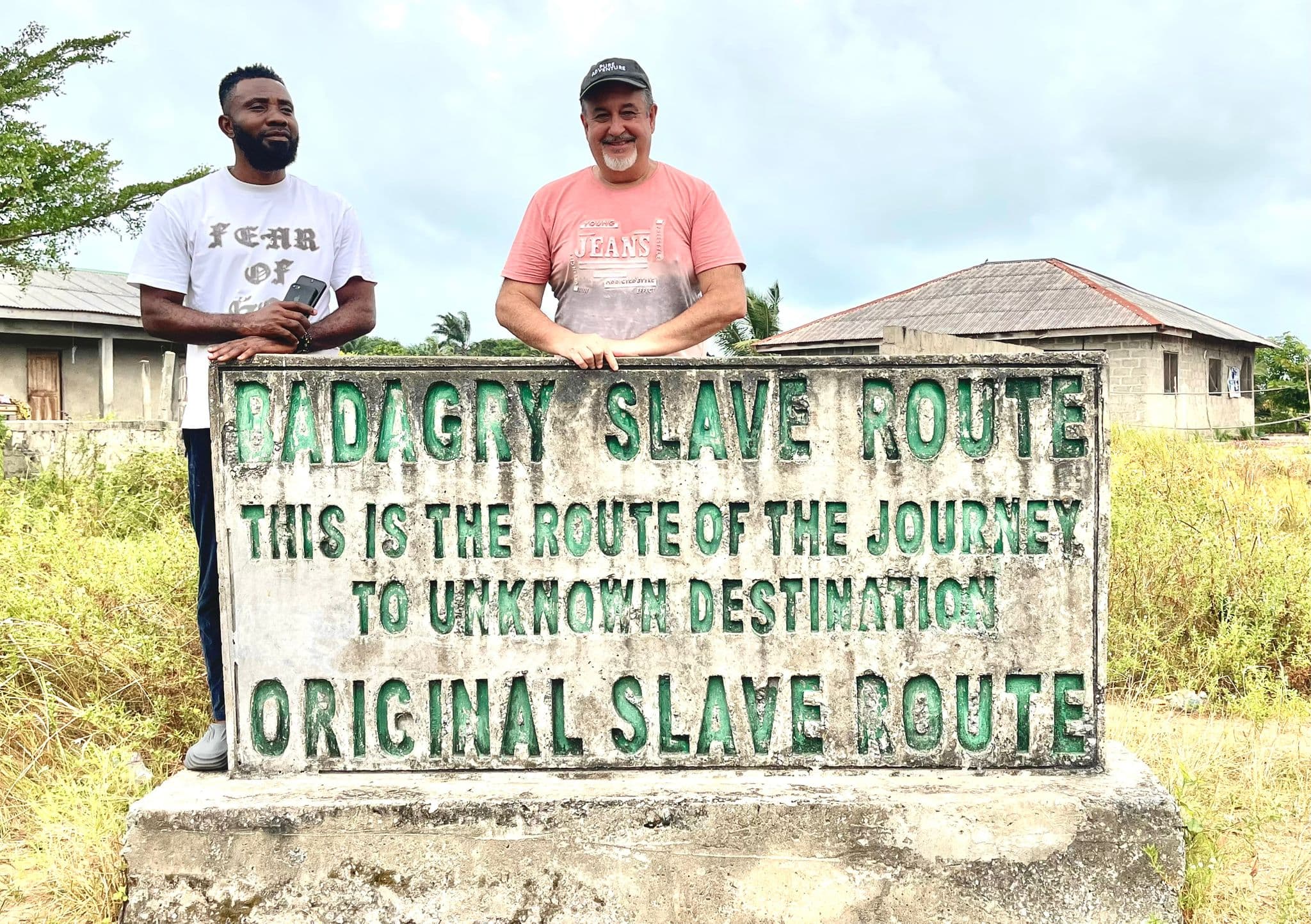
That founding period was shaped directly by the transatlantic slave trade — the Egba's original displacement and the ongoing threat to the new settlement both stemmed from slave-raiding warfare between regional powers, making Abeokuta's founding a direct response to that era, not incidental to it.
Understanding Abeokuta as a federation rather than a single migrating group also explains the city's layout today — distinct quarters, each tracing back to a specific pre-Abeokuta Egba township, still carry their own local identity and, in some cases, their own minor chieftaincy titles operating under the Alake's overarching authority. It's a structure of governance that rewards a little historical context before you arrive, since it isn't obvious just from walking the streets.
Olumo Rock
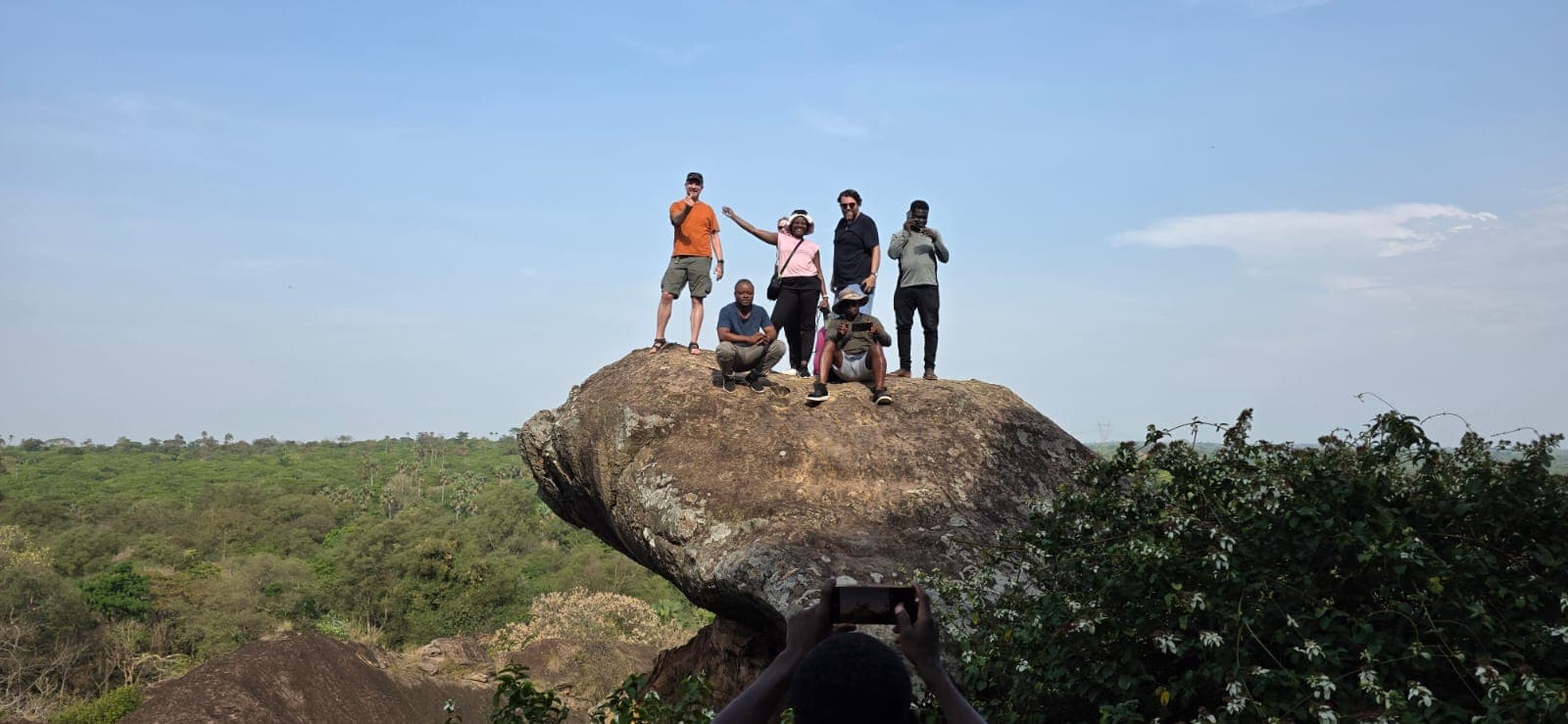
Olumo Rock is Abeokuta's single most famous landmark and the literal reason the city exists — a 137-meter granite outcrop that gave the Egba the defensive high ground to survive the conflicts of the 1830s–1850s, including documented clashes with Dahomey forces. Climbing it (roughly 20 minutes on foot via hand-carved steps, or a lift for those who prefer not to) rewards you with a genuine panoramic view over the city and access to caves used historically for shelter.
This overview only scratches the surface — for the full history, climbing details, current entry information, and practical tips, see our dedicated Olumo Rock guide.
Ake Palace
The Alake's Palace (Ake Palace) is the official residence of the Alake of Egbaland, the Egba paramount ruler, and one of the best examples of traditional Yoruba royal architecture in the region. Parts of the palace grounds function as a museum, housing historical relics, artwork, and artifacts tracing the Egba's history from the pre-Abeokuta era through to the present monarchy. Even from the outside, the palace's scale and architectural detail communicate the Alake's continued significance in Egba society — this isn't a ceremonial relic but an active seat of traditional authority that still carries real weight in Ogun State life today.
Visitors are generally welcome to view the palace exterior and museum sections; deeper access into the Alake's private residence is, understandably, not open to the public. Worth noting: the Ake Arts and Book Festival — a well-known Nigerian literary festival — takes its name from Abeokuta's Ake neighborhood but is a separate, unrelated event (founded by author Lola Shoneyin); don't confuse the two when researching event dates.
Itoku Adire Market
Itoku Market, in the Kemta area of Abeokuta, is the historic center of Adire (tie-dye) textile production and trade in Nigeria — one of the oldest markets in the city, and the place to see, and buy, genuine hand-dyed Adire cloth rather than mass-produced imitations sold elsewhere. Adire-making has historically been a livelihood particularly for Egba women, using techniques (hand-stitching, cassava-paste resist, indigo dyeing) passed down through generations; the introduction of chemical dyes by Malian traders in the early 20th century accelerated production and helped cement Abeokuta's status as Nigeria's Adire capital.
Browsing Itoku is as much a craft demonstration as a shopping trip — vendors are generally happy to explain the dyeing process, and bargaining respectfully is the norm, the same as at most Nigerian markets.
The Adire itself comes in two main traditional techniques worth knowing before you shop: *Adire eleko*, where a cassava-starch paste is hand-painted or stenciled onto fabric before dyeing to create the resist pattern, and *Adire oniko*, which uses raffia thread to tie-and-dye sections of the cloth — the more labor-intensive of the two, and generally the more expensive. Both produce the deep indigo-blue patterns Abeokuta is famous for, though contemporary Adire also comes in a wider range of colors using more modern dye techniques. A vendor who can explain which technique produced a specific piece, and how long it took, is generally a good sign you're looking at genuine handmade work rather than a machine-printed imitation sold as Adire.
Missionary and colonial history
Abeokuta played an outsized role in 19th-century Christian missionary activity in Yorubaland, becoming an early center for both Anglican and Methodist missions and one of the first places in the region with a printing press and formal Western-style education — a legacy that shaped much of southwestern Nigeria's subsequent development. Several of the city's older churches, some dating to this missionary period, remain active places of worship today and are worth a look for their architecture alone if your route takes you past them. That history sits alongside a harder colonial chapter: in 1893, facing pressure from British colonial forces, Egba leaders signed a treaty establishing Abeokuta as a British protectorate rather than risk further conflict — a negotiated outcome rather than a military defeat, which Egba historical accounts generally frame as a pragmatic preservation of a degree of self-governance rather than a simple capitulation.
Abeokuta is also notable as the hometown of several major figures in modern Nigerian history, including Nobel laureate Wole Soyinka and pioneering women's rights activist Funmilayo Ransome-Kuti — a lineage of intellectual and political significance that traces back, in part, to the missionary-era educational infrastructure the city built early on.
Notable people from Abeokuta
Beyond Soyinka and Ransome-Kuti, Abeokuta's missionary-era schools produced a disproportionate share of early 20th-century Nigerian intellectuals, clergy, and civil servants — a legacy locals are genuinely proud of and one that guides at Ake Palace and the city's older churches are usually happy to discuss in more depth than most visitors expect from what looks, on the surface, like a fairly compact regional city.
What food should you try in Abeokuta?
Abeokuta's food scene reflects its Yoruba roots: amala (a smooth yam-flour swallow) paired with ewedu and gbegiri soups is a genuine local specialty worth seeking out over more generic options, alongside asun (spicy grilled goat meat) and fresh suya from evening roadside grills. Local restaurants near the Olumo Rock area and around Itoku Market tend to serve more authentic, less tourist-adjusted versions than anything you'd find in central Lagos.
How do you plan a day trip from Lagos to Abeokuta?
Abeokuta sits roughly 60–90 minutes from Lagos by road, depending on traffic and your starting point, making it a genuinely comfortable single-day trip rather than requiring an overnight stay.
| Stop | Time Needed |
|---|---|
| Olumo Rock (climb + summit) | 1–1.5 hours |
| Ake Palace | 30–45 minutes |
| Itoku Adire Market | 45 minutes – 1 hour |
| Travel time from Lagos (each way) | 60–90 minutes |
A full day trip comfortably covers Olumo Rock, Ake Palace, and Itoku Market with time for lunch — Abeokuta has a good range of local restaurants serving Yoruba specialties — before heading back to Lagos in the evening. Private driver hire for the full day is the most common way visitors structure this, given the multiple stops involved.
Plan a Lagos-area day trip
Abeokuta pairs naturally with a Lagos-based itinerary, and connects thematically to the wider Yoruba cultural region covered in our Osun-Osogbo Festival Tour. Get a custom quote for a custom Abeokuta day trip from Lagos.
---
Frequently asked questions
Is Abeokuta worth visiting?
Yes — it combines a major historical landmark (Olumo Rock), genuine craft culture (Itoku Adire market), and significant Yoruba royal and missionary history in a single, easily accessible day trip from Lagos.
How far is Abeokuta from Lagos?
Roughly 60–90 minutes by road, depending on traffic and starting point — a comfortable single-day round trip.
Can Abeokuta be done as a day trip?
Yes, and it's the most common way visitors see it — Olumo Rock, Ake Palace, and Itoku Market are all comfortably covered in a single day with a private driver or guided tour, without needing overnight accommodation.
What is Abeokuta known for?
Olumo Rock and its role as the Egba people's founding refuge, Itoku Adire tie-dye market, Ake Palace and the Alake's continuing role as Egba paramount ruler, and its significant 19th-century role in Yoruba missionary and educational history.
What's the difference between this guide and the Olumo Rock article?
This is the broader city guide — history, the palace, the market, and trip planning. Our dedicated Olumo Rock guide goes deep specifically on the climb, the rock's detailed history, and current visiting logistics.
Is Abeokuta safe to visit?
Yes — it's a well-established day-trip destination from Lagos with no particular safety concerns beyond the standard precautions you'd take in any Nigerian city (trusted transport, awareness in crowded markets, avoiding isolated areas after dark).
What should I buy at Itoku Market?
Genuine hand-dyed Adire cloth is the standout purchase — look for pieces where the vendor can explain the specific technique (*eleko* or *oniko*) used, which is a good indicator of authentic handmade work versus machine-printed imitations.
Do I need a guide for Abeokuta?
Not strictly, but a guide adds real context at Ake Palace and Olumo Rock specifically — historical detail that isn't otherwise labeled on-site — and simplifies logistics if you're covering all three main stops (Olumo Rock, Ake Palace, Itoku Market) in a single day.